All designs are created by me
Built early mornings, one iteration at a time
© 2026 Daniel PARISI. All Rights Reserved
Shipped
Shipped
Board Game Arena
Board Game Arena
Making Online Board Games
easy to Discover and Play
Making Online Board Games easy to Discover and Play
Overview
Overview
Overview
I led a product discovery and design initiative for Board Game Arena, a browser-based platform bringing together over 10 million players to play hundreds of board games online.
After reaching out to the platform’s director to offer my support, I was invited to collaborate with the team to explore improvements to the game experience. My work focused on researching player behaviour, defining product opportunities and designing solutions to help users find and start games more easily.
I led a product discovery and design initiative for Board Game Arena, a browser-based platform bringing together over 10 million players to play hundreds of board games online.
After reaching out to the platform’s director to offer my support, I was invited to collaborate with the team to explore improvements to the game experience. My work focused on researching player behaviour, defining product opportunities and designing solutions to help users find and start games more easily.
Product
Product
Product
Web Platform
Web Platform
My role
My role
My role
Research & Design
Research & Design
Timeline
Timeline
Timeline
Q4 2025 - Q1 2026
Q4 2025 - Q1 2026
Team
Team
Team
1 Product designer, 1 Product Manager,
2 Software Engineers
1 Product designer, 1 Product Manager,
2 Software Engineers
Platform
Platform
Platform
Problem
Decision friction at the game selection stage
Problem
Decision friction at the game selection stage
Problem
Decision friction at the game selection stage
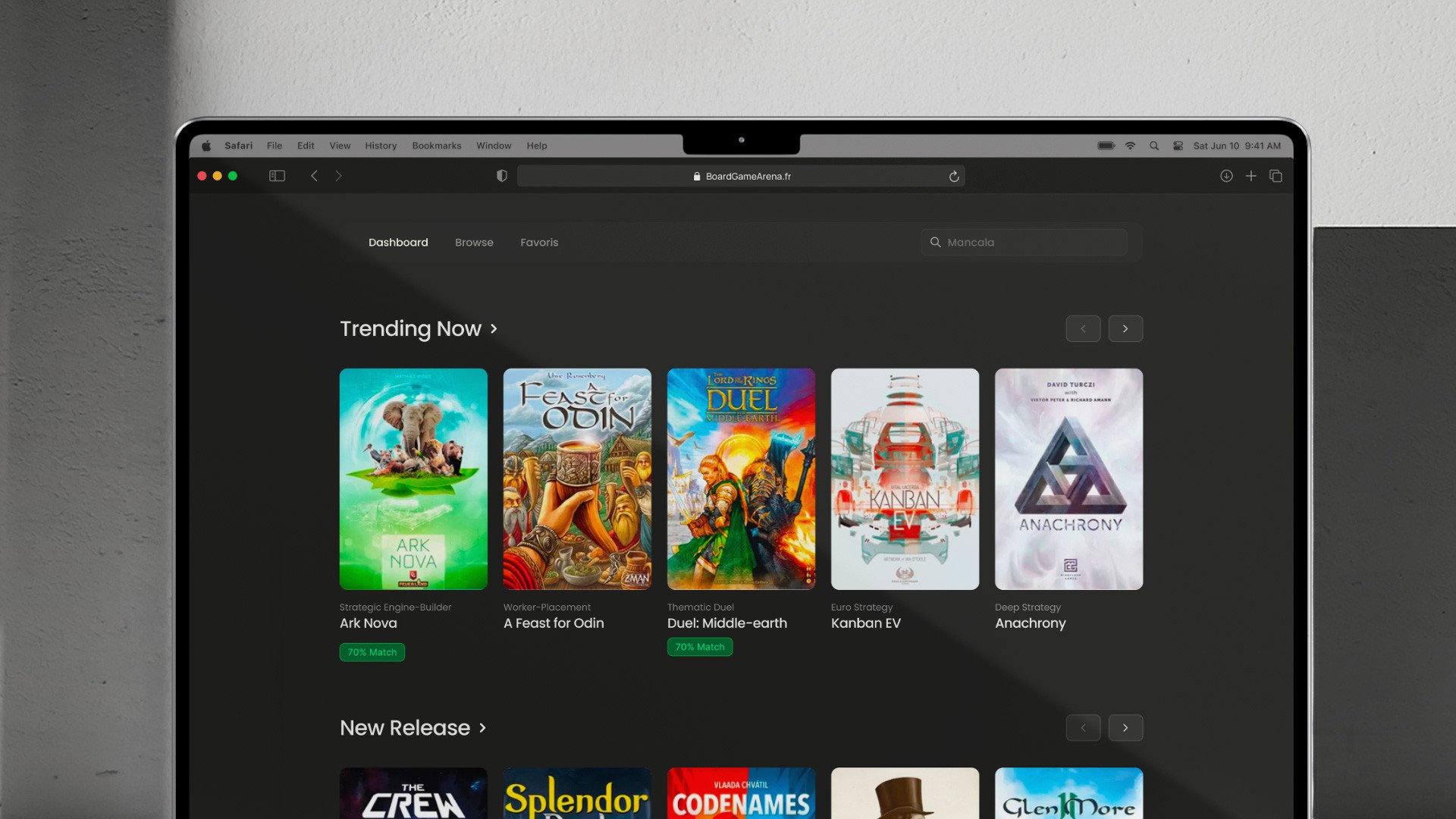
While player acquisition remained strong, internal signals suggested that a significant portion of new users were leaving the platform before starting their first game. With hundreds of titles available, many players struggled to quickly identify a game that matched their preferences, experience level, or available time.
While player acquisition remained strong, internal signals suggested that a significant portion of new users were leaving the platform before starting their first game. With hundreds of titles available, many players struggled to quickly identify a game that matched their preferences, experience level, or available time.
As a result, the game selection stage emerged as a critical moment in the player journey. Reducing decision friction at this point represented an opportunity to help players move faster from exploration to gameplay and ultimately improve early engagement.
As a result, the game selection stage emerged as a critical moment in the player journey. Reducing decision friction at this point represented an opportunity to help players move faster from exploration to gameplay and ultimately improve early engagement.
A board full of constraints
A board full of constraints
A board full of constraints
Designing improvements to the game selection experience required working within several organizational and resource constraints typical of a small product team.
Designing improvements to the game selection experience required working within several organizational and resource constraints typical of a small product team.
Organizational constraints
Organizational constraints
Limited product budget
Limited product budget
Limited product budget
With a small team and a business model focused on maintaining the platform’s extensive catalogue of games, large-scale product redesign initiatives were difficult to prioritize, requiring solutions that could be implemented incrementally.
With a small team and a business model focused on maintaining the platform’s extensive catalogue of games, large-scale product redesign initiatives were difficult to prioritize, requiring solutions that could be implemented incrementally.
Small cross-functional team
Small cross-functional team
Small cross-functional team
The platform was maintained by a team of fewer than ten people. Engineering resources were often dedicated to maintaining and integrating new games, meaning product improvements needed to respect limited development bandwidth.
The platform was maintained by a team of fewer than ten people. Engineering resources were often dedicated to maintaining and integrating new games, meaning product improvements needed to respect limited development bandwidth.
Competing product priorities
Competing product priorities
Competing product priorities
Platform stability and game integrations were core priorities for the team. Any proposed improvements to the game selection experience needed to fit within an already busy development roadmap.
Platform stability and game integrations were core priorities for the team. Any proposed improvements to the game selection experience needed to fit within an already busy development roadmap.
Low design tooling adoption
Low design tooling adoption
Low design tooling adoption
As the only designer involved in the project, introducing design workflows required first aligning the team on tools such as Figma, which had not previously been used in their product development process.
As the only designer involved in the project, introducing design workflows required first aligning the team on tools such as Figma, which had not previously been used in their product development process.
Autonomous design ownership
Autonomous design ownership
Autonomous design ownership
Given the team structure and priorities, much of the discovery and design work was conducted independently, requiring strong self-direction while maintaining alignment with the product vision.
Given the team structure and priorities, much of the discovery and design work was conducted independently, requiring strong self-direction while maintaining alignment with the product vision.
Research
Research
Research
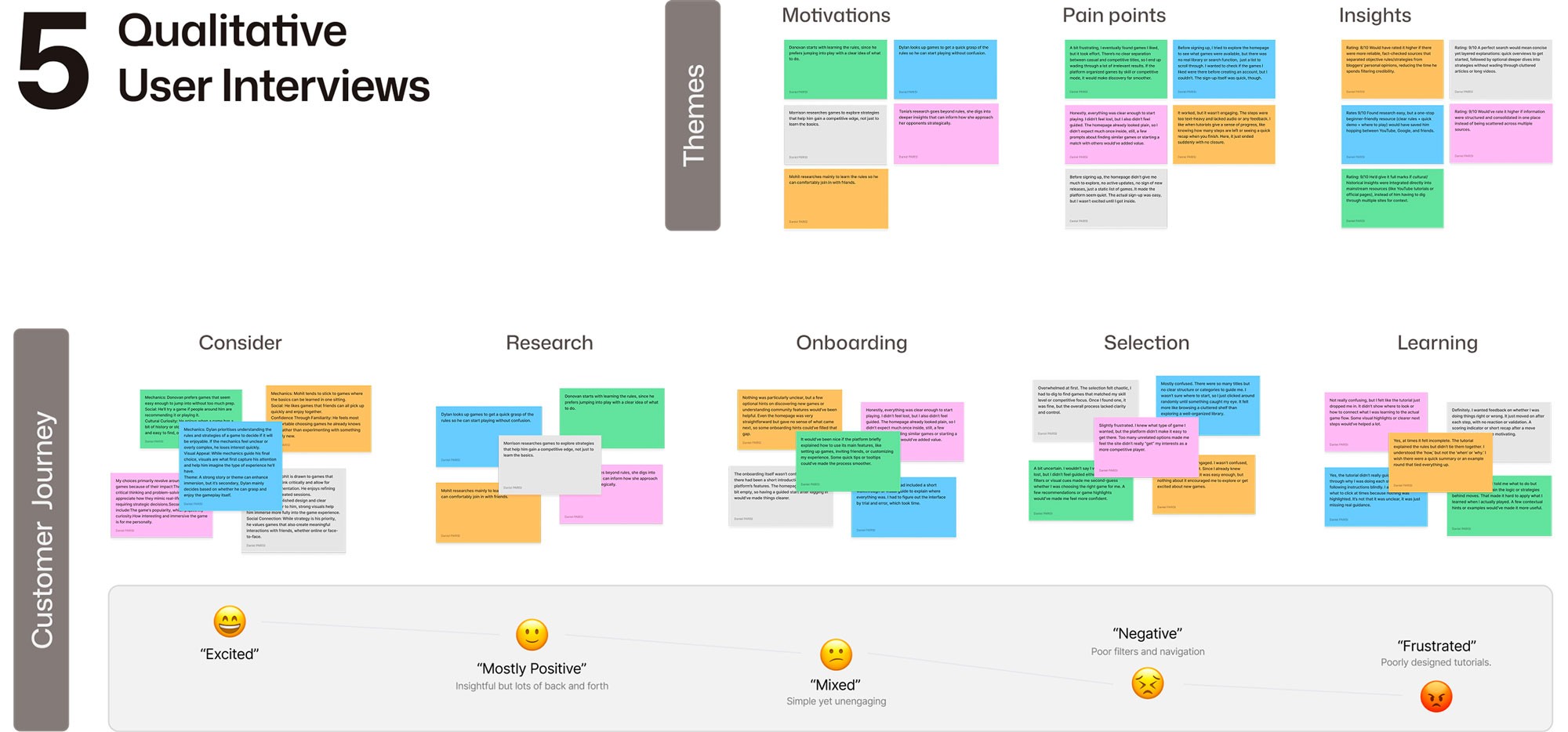
Understanding how players choose a game
Understanding how players choose a game
Understanding how players choose a game
Understanding where players struggled most during their journey on Board Game Arena required validating the signals observed internally by the team. Due to the limited research budget of a small team, we conducted 5 international user interviews (France, USA, India), each incentivised with $50 gift cards to encourage detailed feedback and align qualitative insights with the platform’s internal observations.
Understanding where players struggled most during their journey on Board Game Arena required validating the signals observed internally by the team. Due to the limited research budget of a small team, we conducted 5 international user interviews (France, USA, India), each incentivised with $50 gift cards to encourage detailed feedback and align qualitative insights with the platform’s internal observations.
Common pain points
Common pain points
Decision paralysis during game selection
Decision paralysis during game selection
Decision paralysis during game selection
3/10 average satisfaction score for the game selection experience, with many players reporting that browsing hundreds of games made it difficult to quickly choose one to start playing.
3/10 average satisfaction score for the game selection experience, with many players reporting that browsing hundreds of games made it difficult to quickly choose one to start playing.
Fragmented information across platforms
Fragmented information across platforms
Fragmented information across platforms
75% of players reported frustration due to the lack of a centralised source of information, often switching between YouTube, Reddit, Google and niche websites to understand rules, strategies and reviews.
75% of players reported frustration due to the lack of a centralised source of information, often switching between YouTube, Reddit, Google and niche websites to understand rules, strategies and reviews.
External research feels easier than platform
External research feels easier than platform
External research feels easier than platform
Players rated their external research experience at 7/10, significantly higher than the in-platform selection experience, highlighting the difficulty of identifying relevant games directly on the platform.
Players rated their external research experience at 7/10, significantly higher than the in-platform selection experience, highlighting the difficulty of identifying relevant games directly on the platform.
Prototype
Prototype
Prototype
Simulating algorithmic recommendations…
Simulating algorithmic recommendations…
Simulating algorithmic recommendations…
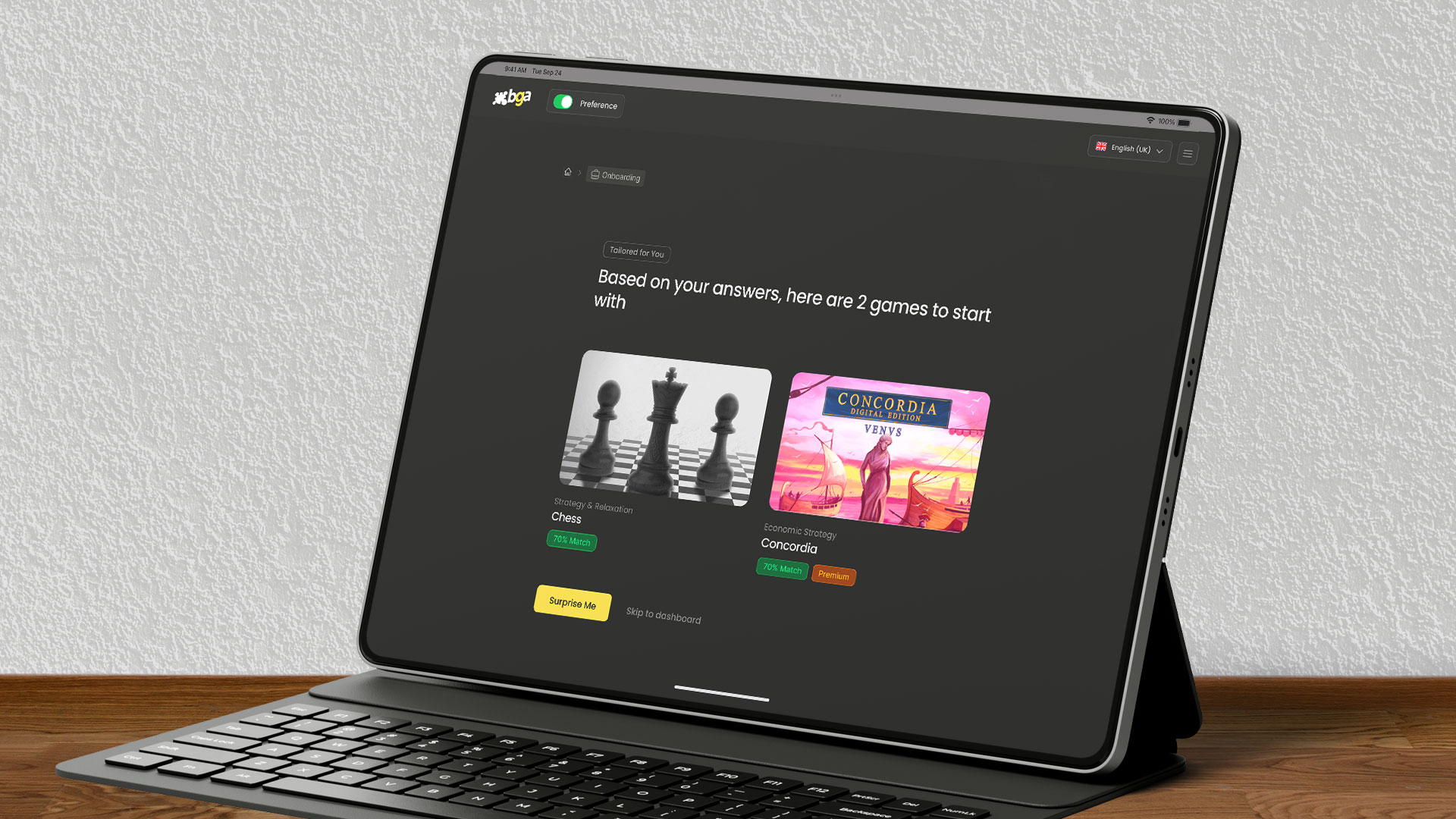
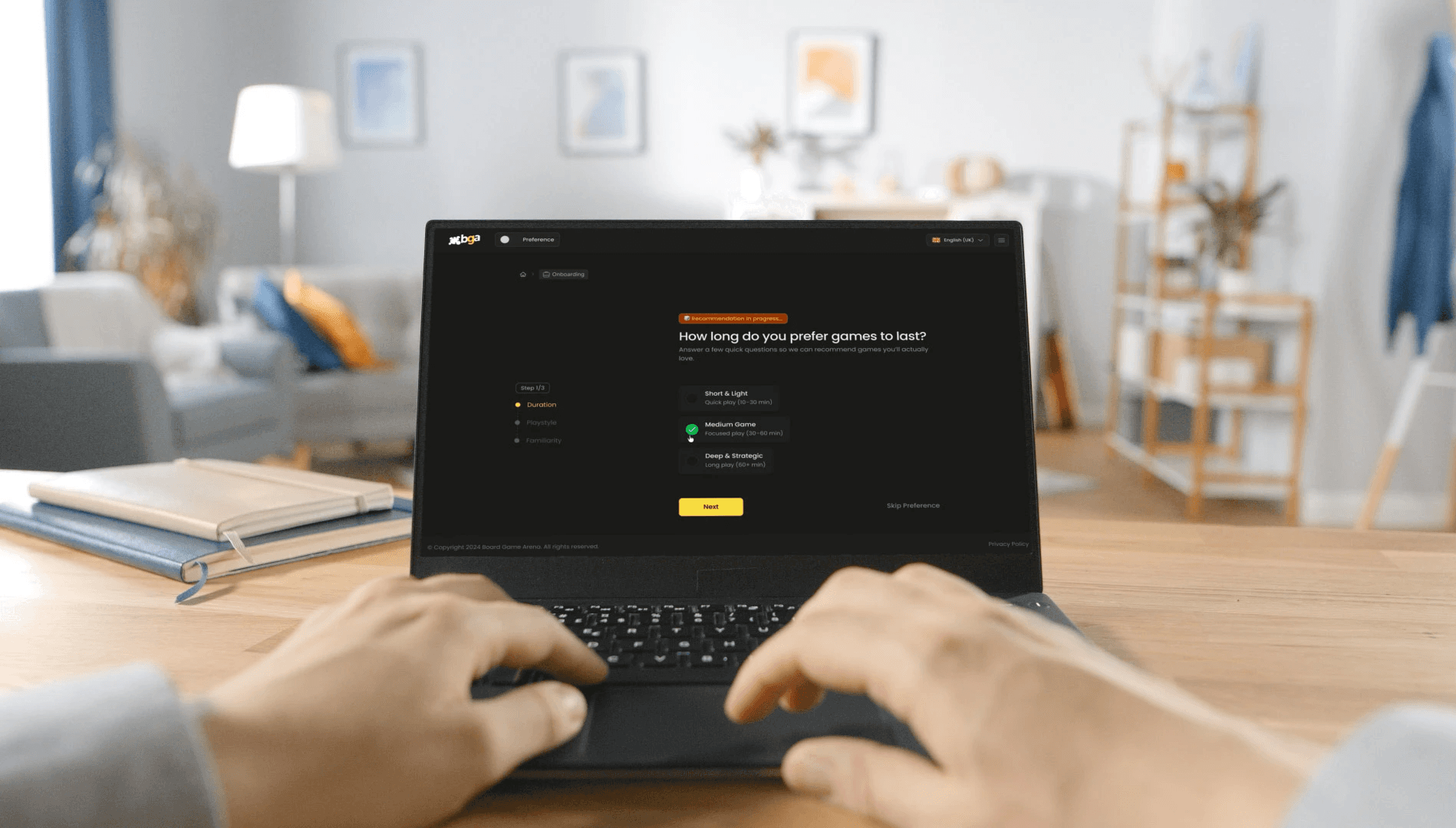
One of the early challenges was prototyping a personalized Roll the Dice experience without access to real recommendation systems or player data. To simulate algorithmic behaviour, I introduced simple preference inputs, asking users questions such as game duration, play style and previously enjoyed games.
Using ProtoPie variables and conditional logic, the prototype dynamically generated tailored game suggestions, creating a realistic testing experience while remaining lightweight enough to validate the concept.
One of the early challenges was prototyping a personalized Roll the Dice experience without access to real recommendation systems or player data. To simulate algorithmic behaviour, I introduced simple preference inputs, asking users questions such as game duration, play style and previously enjoyed games.
Using ProtoPie variables and conditional logic, the prototype dynamically generated tailored game suggestions, creating a realistic testing experience while remaining lightweight enough to validate the concept.
Process
Process
Process
01
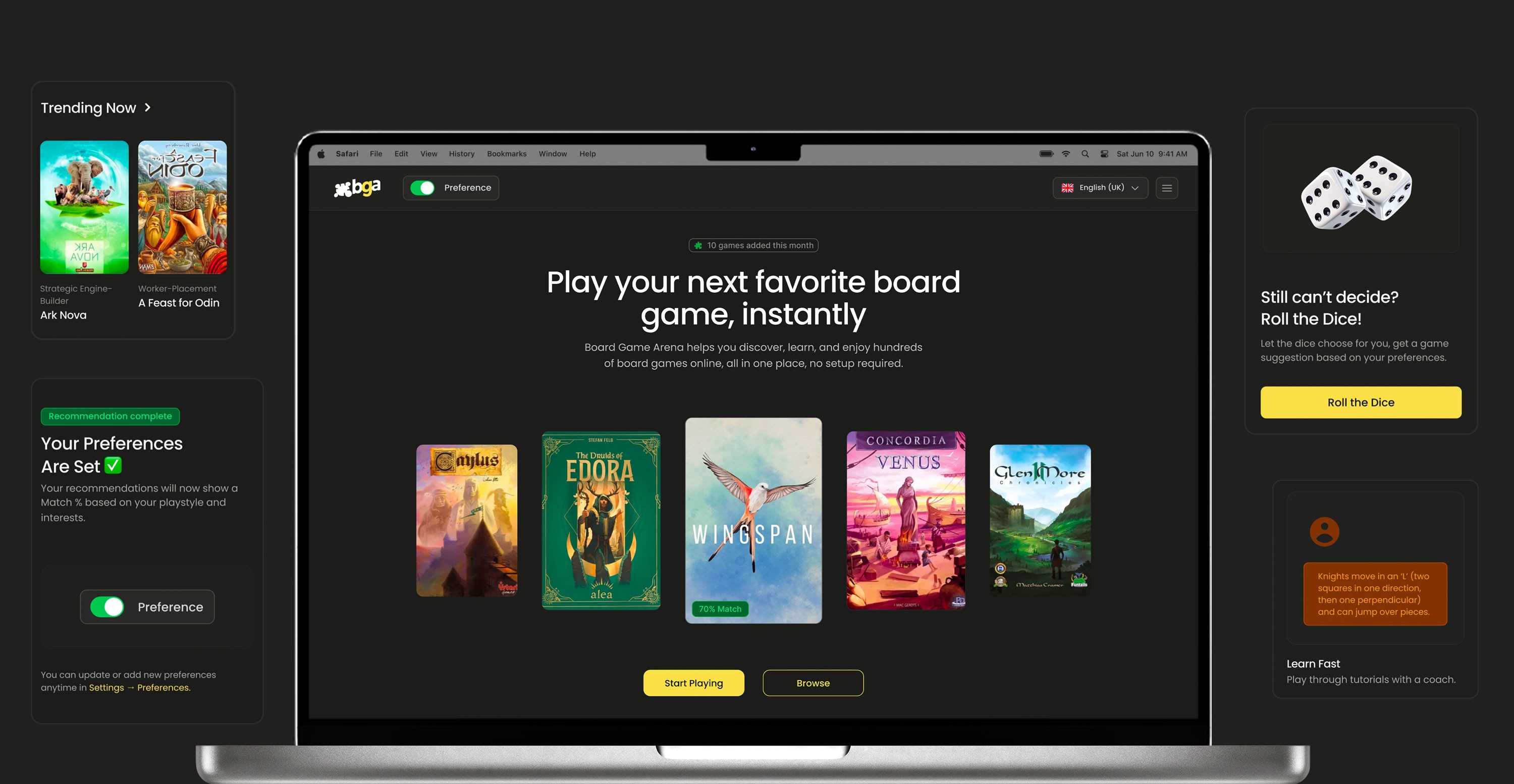
When players don’t know what game to choose, they can Roll the Dice to get a tailored suggestion
02
Players define their preferences (game duration, play style, familiarity)
03
Players receive two selection of games and can choose, reroll the dice, or explore a surprise option
01
When players don’t know what game to choose, they can Roll the Dice to get a tailored suggestion
02
Players define their preferences (game duration, play style, familiarity)
03
Players receive two selection of games and can choose, reroll the dice, or explore a surprise option
A collaborative product effort
A collaborative product effort
A collaborative product effort
The project required close collaboration with the Product Manager and developers to ensure that improvements to the game selection experience remained aligned with platform constraints, engineering feasibility and player needs.
The final design reframes the Roll the Dice feature as guided randomness, using lightweight user inputs and contextual signals to simulate personalized recommendations and help players quickly identify a suitable game, reducing hesitation and accelerating the path to gameplay.
The project required close collaboration with the Product Manager and developers to ensure that improvements to the game selection experience remained aligned with platform constraints, engineering feasibility and player needs.
The final design reframes the Roll the Dice feature as guided randomness, using lightweight user inputs and contextual signals to simulate personalized recommendations and help players quickly identify a suitable game, reducing hesitation and accelerating the path to gameplay.
Results
Results
Results
Impact
Impact
Impact
Within the three months of rolling out this feature:
Within the three months of rolling out this feature:
+45%
+45%
First-game completion rate
First-game completion rate
First-game completion rate
From 25% → 70%, players were significantly more likely to start and complete their first game after interacting with the improved selection experience.
From 25% → 70%, players were significantly more likely to start and complete their first game after interacting with the improved selection experience.
+5 pts
+5 pts
Game discovery & selection satisfaction
Game discovery & selection satisfaction
Game discovery & selection satisfaction
From 3/10 → 8/10, players reported a much clearer and more confident experience when browsing and selecting games.
From 3/10 → 8/10, players reported a much clearer and more confident experience when browsing and selecting games.
-30%
-30%
Time to start a game
Time to start a game
Time to start a game
Players were able to identify and launch a game faster, reducing hesitation during the selection phase.
Players were able to identify and launch a game faster, reducing hesitation during the selection phase.
Want more?
Want more?
Want more?